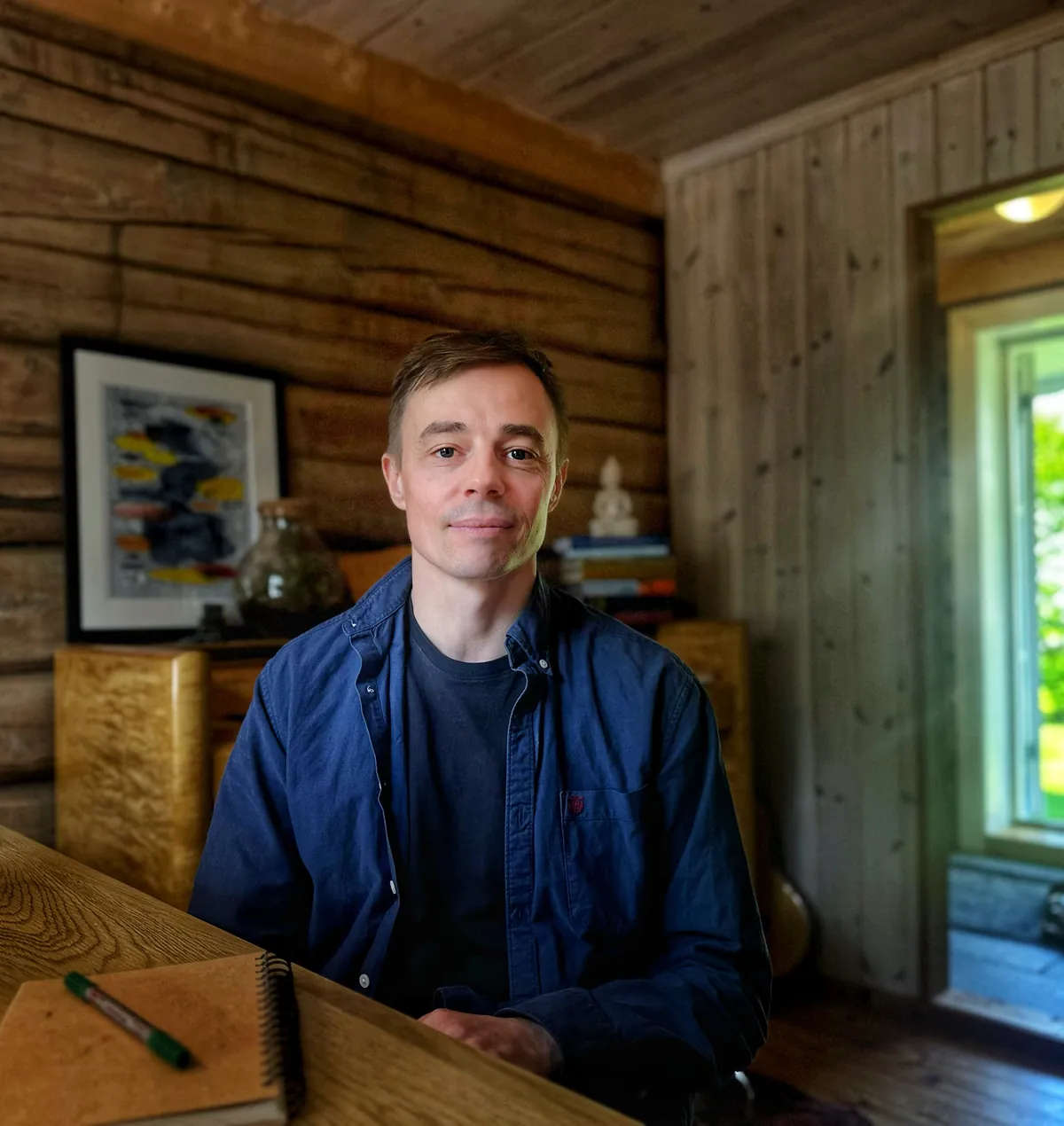
For about as long as I can remember, the deeper questions of being alive have had a hold on me. These days I work as a clinical psychologist and teach meditation, and I live in Norway with my wife and our two children.
The big questions
The village I grew up in, in northern Norway, didn't have much room for the kind of questions I kept carrying around. Among my friends I was an ordinary kid. Inside, those questions had most of my attention. What is God? What is life? What is goodness?
When I was thirteen I spent all my savings traveling across the country to a meditation and yoga retreat. That was more than thirty years ago. Since then I've studied with teachers from many traditions, lived in monasteries, and spent a good deal of time in silence.
Two paths
Years later the same questions came back from the other direction. I studied psychology, became a therapist, and sat on the other side of the couch as a client myself. Both paths gave me something real. And both left me with the same quiet sense that there was a layer underneath what either of them was reaching, something the contemplative traditions have always worked with, and that I wanted to understand through the language of psychology.
That meeting point, between what the traditions have always known and what psychology and neuroscience are now describing, is where my work lives. I've been working with it for more than ten years, in my own sitting and with clients, and it has been more helpful than anything else I've found.
Where I am now
At the moment I'm stepping away from my clinical practice to do this full time: the book, the app, and the Deeply Safe community. My wife is Brazilian, so we live part of the year in Norway and part in Brazil, and we homeschool our two children. When I'm not writing or sitting with the community, I'm usually outdoors, meditating, or trying to keep up with the kids.
None of this got built alone. My wife has been my biggest supporter, coaching me to actually get it done and listening to more than a decade of me talking about what I was finding.